- Details
- Written by: ACE Project
- Category: Uncategorised
- Read Time: 1 min
Speakers
Aseem Paranjape
View profile →Kandaswamy Subramanian
View profile →Tirthankar Roy Choudhury
View profile →Sanjit Mitra
View profile →Surhud More
View profile →R. Srianand
View profile →Nishikanta Khandai
View profile →Prakash Gaikwad
View profile →Sowgat Muzahid
View profile →Kanak Saha
View profile →Rajeshwari Dutta
View profile →Gulab Dewangan
View profile →Neeraj Gupta
View profile →Bhooshan Gadre
View profile →Anirban Chakraborty
View profile →Anshuman Borgohain
Google Scholar →Edmund Christian Herenz
View profile →- Details
- Written by: ACE Project
- Category: Uncategorised
- Read Time: 14 mins
Meet Your Instructors
Prof. Sayan Kar
Sayan Kar is a Professor in the Department of Physics at IIT Kharagpur. He completed his BSc (Hons) from Visva Bharati, Santiniketan, and his MSc and PhD (1994) from IIT Kanpur. After postdoctoral research at several institutions, including IUCAA (1996–1998), he joined IIT Kharagpur in 1998. His research interests span general relativity, modified theories of gravity, and gravitational waves. He has also contributed to physics pedagogy through articles on classical and quantum mechanics, optics, and gravitational physics.
Prof. Nikhil Mukund
Nikhil Mukund is an Assistant Professor at IUCAA, Pune. He works primarily on precision interferometry, detector commissioning, and intelligent instrumentation for current and future gravitational-wave observatories. Before joining IUCAA in 2026, he was a Research Scientist at the MIT LIGO Laboratory, where he worked on laser-beam control and the transfer of embedded-AI techniques from tabletop optical systems to LIGO-scale subsystems.
Prof. Chandrakant Mishra
Chandrakant Mishra is an Associate Professor in the Department of Physics at IIT Madras. He obtained his PhD in 2013 from the Indian Institute of Science Bangalore under the supervision of Prof. Bala Iyer at the Raman Research Institute. Following postdoctoral positions at IISER Trivandrum and ICTS Bangalore, he joined IIT Madras in 2016. His research interests cover analytical relativity, gravitational wave theory and data analysis, modelling of coalescing compact binaries using numerical and perturbative approaches, tests of general relativity, and compact star astrophysics.
Prof. Arunava Mukherjee
Arunava Mukherjee began his academic foundation in high-energy astrophysics, specialising in accreting neutron star and black hole systems within low-mass X-ray binaries. He is the lead developer of BinaryWeave, a dedicated pipeline designed for the direct detection of continuous gravitational waves from spinning neutron stars in known binary systems. At SINP, his research group investigates the physics of dense and extreme matter, with a specific focus on the equation of state and fundamental physics of neutron stars, and the integration of machine learning methodologies into these frameworks.
Prof. Anand Sengupta
Anand Sengupta is a faculty member in the Department of Physics at IIT Gandhinagar, where he works on gravitational-wave physics, data analysis, and astrophysics. He received his PhD from IUCAA, Pune in 2005, followed by postdoctoral positions at Cardiff University and the LIGO Laboratory at Caltech. A senior member of the LIGO Scientific Collaboration and the LIGO-India Scientific Collaboration, he serves on the LIGO Council and has contributed to compact binary coalescence searches as well as the development of the LAL and LALApps software libraries. His current research emphasises fast parameter estimation, low-latency inference, multi-band observations, and probing fundamental physics with gravitational waves, including signatures of dark matter and deviations from general relativity. He is also actively involved in teaching and curriculum design with an emphasis on intuition, collaboration, and computation.
Prof. Bhooshan Gadre
Prof. Bhooshan Gadre's research centres on gravitational wave astronomy and astrophysics, with particular emphasis on understanding black hole binary formation and evolution, and advancing multi-messenger astronomy through efficient low-latency detection methods. Prior to joining IUCAA, he held postdoctoral positions at the Max Planck Institute for Gravitational Physics (AEI) and Utrecht University, contributing to compact binary detection pipelines and developing surrogate waveform models for precessing compact binary mergers. At IUCAA, his work focuses on developing real-time detection pipelines for LIGO-India, and on targeted searches for supermassive black hole mergers, intermediate-mass black hole binaries, and sub-solar mass objects.
Prof. Sanjit Mitra
Sanjit Mitra is a professor at IUCAA, Pune. His research focuses on gravitational wave observations and the cosmic microwave background radiation. He has developed algorithms for accurate and efficient data analysis for both GW experiments and CMB missions, and has been a long-standing member of the LIGO-Virgo Scientific Collaboration, the IndIGO consortium, and the Planck Collaboration. In gravitational waves, he mainly works on the stochastic gravitational wave background and multi-messenger data analysis methods.
Dr. Shivaraj Kandhasamy
Shivaraj Kandhasamy is a Scientific Officer at IUCAA, Pune, and a member of the LIGO-India team. His expertise spans gravitational wave detector characterisation, calibration of Advanced LIGO instruments, and stochastic gravitational wave background searches. He previously held a position at the LIGO Livingston Observatory, working on detector commissioning and data analysis, and contributed to the first co-located stochastic background analysis using LIGO Hanford detectors. He has also contributed to defining the LIGO-India observatory coordinate system for GW analyses and has been active in science outreach.
Dr. Suresh Doravari
Suresh Doravari is a Senior Scientific Officer at IUCAA, Pune, working on the LIGO-India project. His expertise spans gravitational wave detector commissioning, optics, laser interferometry, and fundamental tests of physics. He has contributed to Advanced LIGO commissioning at both Livingston and Hanford observatories, worked on laser noise mitigation using auxiliary sensors in GEO600, and co-authored searches for scalar field dark matter using interferometric detectors operating beyond the quantum shot-noise limit.
Dr. Apratim Ganguly
Apratim Ganguly is a physicist at the Inter-University Centre for Astronomy and Astrophysics (IUCAA), Pune. He works on analysing real gravitational-wave detector data to test general relativity and extract astrophysical insights from compact object mergers. His research covers the full pipeline of gravitational wave science, including the development of analysis techniques, black hole physics, alternative theories of gravity, and connections to fast radio bursts. He received his PhD from the University of KwaZulu-Natal, Durban, and has held postdoctoral positions at ICTS-TIFR, PUCV (Chile), and Rhodes University, bringing a unique perspective to both theoretical and observational aspects of gravitational wave astronomy.
Dr. Shubhagata Bhaumik
Shubhagata Bhaumik is a postdoctoral fellow at the Indian Institute of Technology (IIT) Bombay. She completed her PhD in 2025 at the University of Florida under the supervision of Prof. Imre Bartos. Her research focuses on gravitational-wave data analysis to uncover the origins of binary black hole systems. She specialises in eccentric binary black hole mergers, developing unmodelled search algorithms and addressing the unique challenges involved in interpreting signals from eccentric binaries. She is also committed to fostering an inclusive and accessible gravitational-wave community through mentorship and outreach.
Dr. Samanwaya Mukherjee
Samanwaya Mukherjee is an astrophysicist working as a postdoctoral researcher at the International Centre for Theoretical Sciences (ICTS) in Bangalore. He completed his PhD in 2024 at the Inter-University Centre for Astronomy and Astrophysics (IUCAA) in Pune. His research focuses on gravitational waves, the tiny ripples in spacetime produced by the collision of compact objects such as black holes and neutron stars. He is particularly interested in the dynamics of black holes under extreme conditions, the behaviour of compact objects in intense gravity, including tidal heating just before merger, and the development of accurate analytical and numerical models of gravitational waveforms to compare Einstein's predictions with observations.
Dr. Sayantani Dutta
Sayantani Dutta is a postdoctoral fellow at the Inter-University Centre for Astronomy and Astrophysics (IUCAA). She completed her PhD at the Chennai Mathematical Institute in 2023, after which she served as a Rising Scholar postdoctoral fellow and lecturer at the University of Virginia before joining IUCAA in 2025. Her research develops new and efficient methods to test Einstein's theory of general relativity using gravitational waves from compact binary coalescences detected by the LIGO-Virgo-KAGRA collaboration. She is particularly interested in waveform modelling in modified theories of gravity and in creating faster, more efficient data analysis techniques.
✉ sayantani.datta@iucaa.in/a>Akash Maurya
Akash Maurya is a PhD research scholar in the Astrophysics and Relativity group at the International Centre for Theoretical Sciences (ICTS), Bengaluru. As a gravitational-wave astrophysicist, he specialises in eccentric black hole binaries. His research focuses on source modelling of binary black holes in eccentric orbits, including surrogate modelling and phenomenology, as well as eccentric gravitational wave data analysis.
Gopal Prabhu
Gopal Prabhu is a fourth-year PhD researcher at the Inter-University Centre for Astronomy and Astrophysics (IUCAA), working under the supervision of Prof. Shasvath J. Kapadia. His research in gravitational-wave data analysis spans population-level constraints on compact objects using the non-detection of continuous gravitational waves, a range of theoretical and data-analysis investigations in gravitational-wave lensing, and studies of compact binary coalescences occurring within dynamical astrophysical environments.
Abhishek Sharma
Abhishek Sharma is a postdoctoral research scholar at IUCAA, Pune. His work focuses on gravitational wave astronomy and data analysis. His recent work includes developing a meshfree approach for accelerated parameter estimation of supermassive black hole binaries for LISA, enabling rapid source reconstruction from multi-detector compact binary signals.
Anirban Kopty
Anirban Kopty is a fourth-year PhD research scholar at the Inter-University Centre for Astronomy and Astrophysics (IUCAA), working under the supervision of Prof. Sanjit Mitra. His research in gravitational wave data analysis includes the development of a low-latency method for searching strongly lensed gravitational wave signals that have not yet been observed. He also contributes to fast parameter estimation techniques and tests of general relativity.
Yogita Kumari
Yogita Kumari is a second-year PhD student working under the supervision of Prof. Sanjit Mitra at the Inter-University Centre for Astronomy and Astrophysics (IUCAA), Pune. Her research focuses on probing cosmology using gravitational waves. She is currently working on neutron star-black hole mergers as standard sirens to measure the Hubble constant, as well as on improving All-Sky-All-Frequency searches for continuous gravitational wave sources. She is particularly interested in the statistical aspects of these problems.
- Details
- Written by: ACE Project
- Category: Uncategorised
- Read Time: 9 mins
Physics of Galaxy Formation
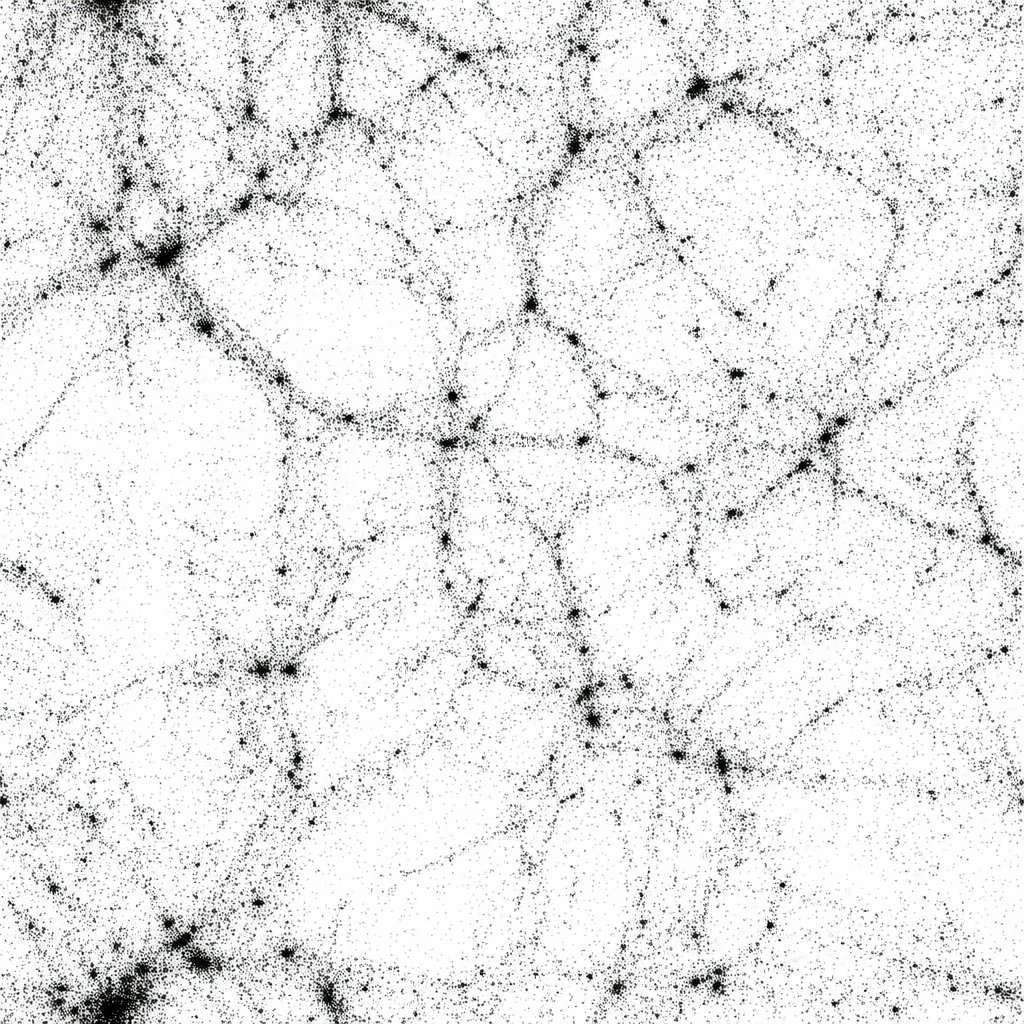
From background cosmology and the growth of structure through cosmic reionization, the circumgalactic and intergalactic medium, high-redshift galaxies, gravitational lensing, and multi-wavelength probes of galaxy evolution. This course explores different aspects of galaxy physics across three weeks of lectures and hands-on tutorials.
This course offers a comprehensive introduction to the physics of galaxy formation, beginning with background cosmology and the linear growth of perturbations, and progressing through non-linear structure formation, galaxy formation, the circumgalactic medium, and the intergalactic medium. It then turns to cosmic reionization, high-redshift galaxy surveys, and finally to other multi-wavelength probes of galaxy evolution such as gravitational lensing, the Square Kilometre Array, black hole–galaxy co-evolution, HI 21-cm cosmology, and gravitational-wave observatories. Lectures are paired with hands-on tutorials in numerical and observational techniques.
Meet the speakersModules
01Cosmology & Structure Formation▼
Lecture 1.1: Background Cosmology
Lecture 1.3: Cosmology & Structure Formation using CMBR
TutorialCosmological Simulations Tutorial
02Galaxy Formation, CGM & the IGM▼
Lecture 2.1: Semi-analytical Models & Observations of Galaxy Formation
Lecture 2.2: CGM & Implications to Galaxy Formation
Lecture 2.3: Simulating the IGM & IGM/Galaxy Connection
TutorialNumerical Modeling of Absorption Spectra
03Cosmic Reionization▼
Lecture 3.1: Models of Cosmic Reionization & Observational Probes
TutorialReionization Tutorial
04High-Redshift Galaxies▼
Lecture 4.1: Extracting Physical Quantities of High-z Galaxies
TutorialSurface Photometry of High-z Galaxies
TutorialRedshift Estimation of High-z Galaxies
05Other Probes of Galaxies▼
Lecture 5.1: Gravitational Lensing Probes of Galaxy Formation
Lecture 5.2: Square Kilometre Array (SKA)
Lecture 5.3: Black Holes and Galaxies
Lecture 5.4: Probing Galaxies using the HI 21-cm Line
Lecture 5.5: Laser Interferometer Gravitational-Wave Observatory
- Details
- Written by: ACE Project
- Category: Uncategorised
- Read Time: 6 mins
Meet Your Instructors
Dr. Suprit Singh
Dr. Suprit Singh is an Assistant Professor in the Department of Physics at IIT Delhi, where he leads the Quantum Gravitation & Astrophysics Lab (qGAL). He completed his PhD at IUCAA under Prof. T. Padmanabhan and was awarded the V. V. Narlikar Best Thesis Award. Following postdoctoral research at the University of New Brunswick and the University of Delhi, his work spans quantum gravity, cosmology, galactic astronomy, and astronomical instrumentation. His expertise in computational astrophysics and observational techniques provides a strong foundation for understanding modern astronomical methods.
Dr. Bharti Arora
Dr. Bharti Arora is an Assistant Professor (Grade II) at JIIT Noida. She obtained her PhD from ARIES, Nainital, and has held postdoctoral positions at ARIES and the University of Liège. Her research focuses on massive stars, including O-type and Wolf–Rayet stars, as well as solar coronal studies during eclipses. With expertise in multi-wavelength observations, spectroscopy, and polarimetry, she brings valuable insight into observational astronomy and instrumentation.
Dr. Arun Varma Thampan
Dr. Arun Varma Thampan is a faculty member at St. Joseph’s University, Bengaluru, with over a decade of teaching experience at the postgraduate level. He completed his PhD at the Indian Institute of Astrophysics, working on neutron stars, accretion disks, and general relativity. He has also held postdoctoral positions at IUCAA and SISSA, Italy. His module emphasizes practical engagement, introducing participants to observational methods and data analysis through hands-on activities.
Dr. Joydip Mitra
Dr. Joydip Mitra is an Associate Professor at Scottish Church College, Kolkata, and a guest faculty member at West Bengal State University. He completed his PhD at the Indian Association for the Cultivation of Science, working on general relativity, black holes, and higher-dimensional gravity. A gold medalist from the University of Calcutta, he has contributed to curriculum development in astronomy and astrophysics. His teaching combines clarity with depth, particularly in stellar physics and observational interpretation.
Dr. Rabbi Akkiba Angiras
Dr. Rabbi Akkiba Angiras is the Dean of the School of Physical Sciences at St. Joseph’s University, Bengaluru, with over three decades of teaching experience. He completed his Master’s at IIT Bombay and his PhD through M.G. University and the Raman Research Institute, focusing on radio observations of spiral galaxies. He has played a key role in establishing academic programmes in physics and space sciences, including collaborations with ISRO and RRI. His module explores stellar evolution with both conceptual depth and observational context.
Dr. K. Indulekha
Dr. K. Indulekha is a Professor of Astrophysics with a PhD from the Indian Institute of Science, Bengaluru. Her research includes galaxy formation, stellar clusters, and gas dynamics in astrophysical systems. She is a Life Member of the Astronomical Society of India and an International Affiliate of the American Astronomical Society. With extensive teaching and research experience, she offers a comprehensive perspective on galactic structure and evolution.
Dr. Geetanjali Sethi
Dr. Geetanjali Sethi is an Associate Professor of Physics and Dean of Research at St. Stephen’s College, University of Delhi. She holds a PhD in theoretical cosmology and works on constraining dark energy models using cosmological observations. With over two decades of teaching experience and academic leadership, her module provides a rigorous introduction to the origin, evolution, and large-scale structure of the universe.