

2025 · Introductory Course
A First Course in Astronomy and Astrophysics
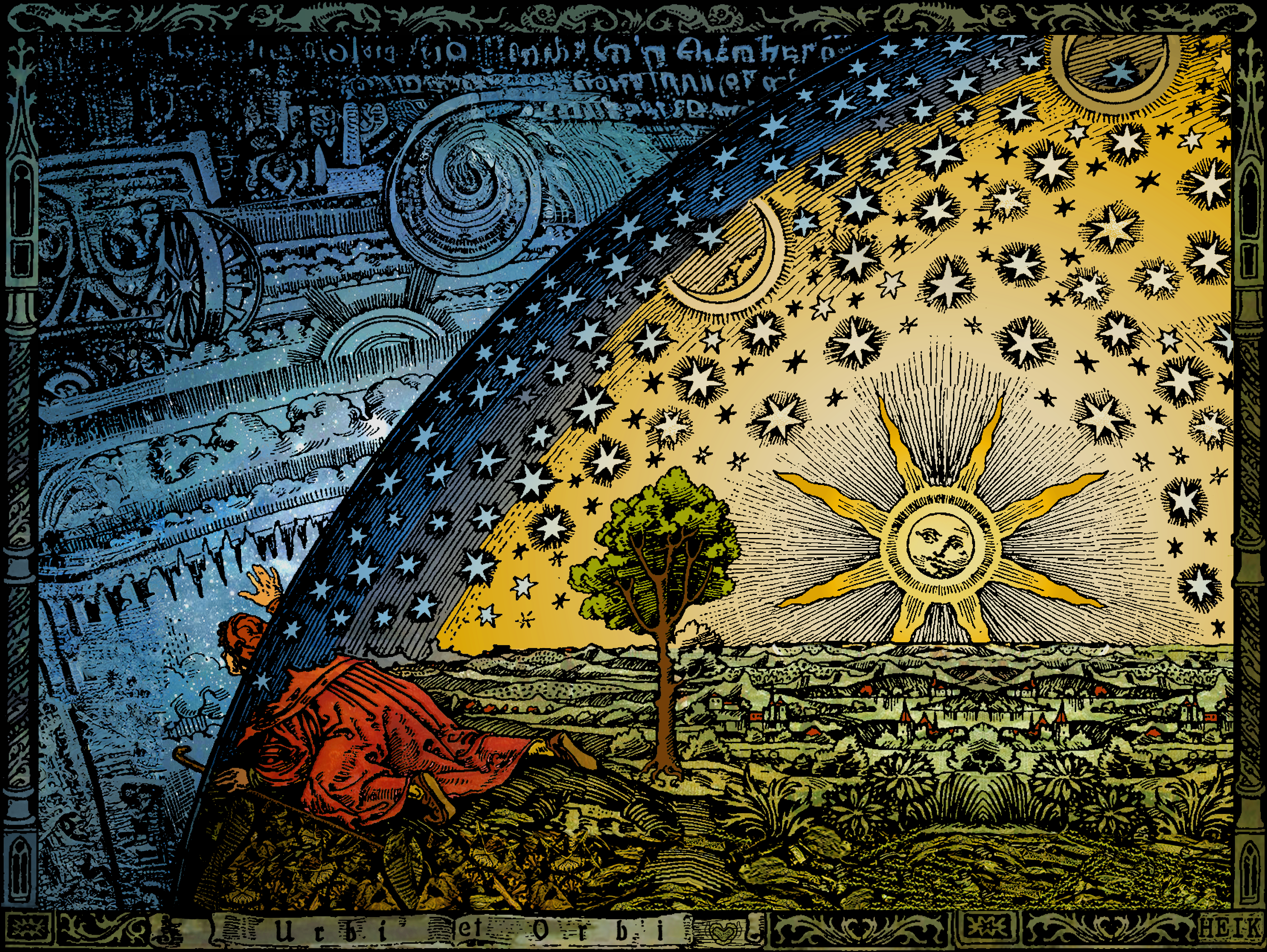
This introductory course covers the foundations of astronomy and astrophysics across six structured modules — from the basic tools and techniques of observational astronomy, through stellar physics and evolution, to the large-scale structure of the Milky Way, galaxies, and the Universe as a whole. The course features hands-on activities alongside video lectures and problem sets, making it suitable for undergraduate students, university teachers, and anyone seeking a rigorous first encounter with modern astrophysics.
Meet the speakersVideo Lectures
01Introduction and Tools of Astronomy▼
Lecture 1.1: Multiwavelength astronomy & Positional astronomy
View Lecture Summary ▼
An introduction to the night sky — constellations, the celestial sphere, right ascension and declination, the ecliptic, and the apparent motion of stars and planets. Practical guide to reading star charts and using planetarium software.
Lecture 1.2: Positional astronomy – I
View Lecture Summary ▼
Optical design of refracting and reflecting telescopes, key parameters (aperture, focal length, magnification, resolving power), detector types (CCD, CMOS), and an introduction to radio and space-based observatories.
Lecture 1.3: Positional astronomy – II
View Lecture Summary ▼
Wave and particle nature of light, the electromagnetic spectrum from radio to gamma rays, blackbody radiation and Planck's law, Wien's displacement law, Stefan-Boltzmann law, and the concept of astronomical magnitude.
Lecture 1.4: Photometry
View Lecture Summary ▼
The cosmic distance ladder — parallax, spectroscopic parallax, Cepheid variables, Type Ia supernovae as standard candles, and Hubble's law. Discussion of units: AU, parsec, light year, and their physical meaning.
Lecture 1.5: Spectroscopy
View Lecture Summary ▼
Wave and particle nature of light, the electromagnetic spectrum from radio to gamma rays, blackbody radiation and Planck's law, Wien's displacement law, Stefan-Boltzmann law, and the concept of astronomical magnitude.
Lecture 1.6: Observational tools and techniques - I
View Lecture Summary ▼
Wave and particle nature of light, the electromagnetic spectrum from radio to gamma rays, blackbody radiation and Planck's law, Wien's displacement law, Stefan-Boltzmann law, and the concept of astronomical magnitude.
Lecture 1.7: Observational tools and techniques - II
View Lecture Summary ▼
Wave and particle nature of light, the electromagnetic spectrum from radio to gamma rays, blackbody radiation and Planck's law, Wien's displacement law, Stefan-Boltzmann law, and the concept of astronomical magnitude.
02Hands-on Activities▼
Activity 2.1: Creating Color-Composites – I
View Activity Summary ▼
Guided naked-eye observation session — identifying prominent constellations, the Milky Way band, and key bright stars. Introduction to binocular astronomy: star clusters, double stars, and the Andromeda galaxy.
Activity 2.2: Creating Color-Composites – II
View Activity Summary ▼
Hands-on session with equatorial and alt-azimuth mounted telescopes. Polar alignment, star-hopping techniques, eyepiece selection, and focused observation of the Moon, planets, and deep-sky objects.
Activity 2.3: Creating Color-Color diagrams
View Activity Summary ▼
Introduction to astronomical image reduction — bias, dark and flat-field corrections, image stacking, and basic photometry using free tools (AstroImageJ / FITS Liberator). Participants process real observational data.
Activity 2.4: Solar Rotation - I
View Activity Summary ▼
Introduction to astronomical image reduction — bias, dark and flat-field corrections, image stacking, and basic photometry using free tools (AstroImageJ / FITS Liberator). Participants process real observational data.
Activity 2.5: Solar Rotation - II
View Activity Summary ▼
Introduction to astronomical image reduction — bias, dark and flat-field corrections, image stacking, and basic photometry using free tools (AstroImageJ / FITS Liberator). Participants process real observational data.
Activity 2.6: Solar Rotation - III
View Activity Summary ▼
Introduction to astronomical image reduction — bias, dark and flat-field corrections, image stacking, and basic photometry using free tools (AstroImageJ / FITS Liberator). Participants process real observational data.
Activity 2.7: Solar Rotation - IV
View Activity Summary ▼
Introduction to astronomical image reduction — bias, dark and flat-field corrections, image stacking, and basic photometry using free tools (AstroImageJ / FITS Liberator). Participants process real observational data.
03Stellar Observations and Stellar Structure▼
Lecture 3.1: Stellar observations – I
View Lecture Summary ▼
Absorption and emission spectra, the Harvard spectral classification (OBAFGKM), luminosity classes, and the Morgan-Keenan system. Spectroscopic determination of stellar temperatures, composition, radial velocities, and binary systems.
Lecture 3.2: Stellar observations – II
View Lecture Summary ▼
Constructing and interpreting the H-R diagram — the main sequence, giant branch, supergiant and white dwarf regions. Colour-magnitude diagrams of star clusters as probes of stellar age and distance.
Lecture 3.3: Hertzsprung-Russell diagram
View Lecture Summary ▼
Equations of stellar structure — hydrostatic equilibrium, energy transport (radiation, convection), and nuclear energy generation. The proton-proton chain and CNO cycle. Introduction to stellar models and the mass-luminosity relation.
Lecture 3.4: Stellar structure – I
View Lecture Summary ▼
Radiative transfer in stellar atmospheres, opacity sources, the photosphere, chromosphere and corona. Solar activity — sunspots, flares, coronal mass ejections — and their relationship to stellar magnetic fields.
Lecture 3.5: Stellar structure – II
View Lecture Summary ▼
Radiative transfer in stellar atmospheres, opacity sources, the photosphere, chromosphere and corona. Solar activity — sunspots, flares, coronal mass ejections — and their relationship to stellar magnetic fields.
04Stellar Evolution & End State of Stars▼
Lecture 4.1: Stellar evolution – I
View Lecture Summary ▼
Interstellar medium, molecular clouds, and the Jeans criterion for gravitational collapse. Pre-main sequence contraction, Hayashi tracks, and T Tauri stars. Formation of protoplanetary discs and the initial mass function.
Lecture 4.2: Stellar evolution – II
View Lecture Summary ▼
Stellar lifetimes on the main sequence as a function of mass, changes in chemical composition, and the evolution of the zero-age main sequence. The Sun as a case study — past, present and future.
Lecture 4.3: Stellar evolution – III
View Lecture Summary ▼
Subgiant and red giant branch evolution, helium flash, horizontal branch, asymptotic giant branch stars, thermal pulses and mass loss. Planetary nebulae formation and the s-process nucleosynthesis.
Lecture 4.4: Stellar evolution – IV
View Lecture Summary ▼
Stellar end states — white dwarfs and the Chandrasekhar limit, core-collapse supernovae and neutron stars, pulsars and magnetars, stellar-mass black holes. A brief introduction to gravitational wave sources from compact binary mergers.
Lecture 4.5: Stellar evolution – V
View Lecture Summary ▼
Stellar end states — white dwarfs and the Chandrasekhar limit, core-collapse supernovae and neutron stars, pulsars and magnetars, stellar-mass black holes. A brief introduction to gravitational wave sources from compact binary mergers.
Lecture 4.6: Stellar evolution – VI
View Lecture Summary ▼
Stellar end states — white dwarfs and the Chandrasekhar limit, core-collapse supernovae and neutron stars, pulsars and magnetars, stellar-mass black holes. A brief introduction to gravitational wave sources from compact binary mergers.
05Milky Way and Galaxies▼
Lecture 5.1: Galaxy morphology
View Lecture Summary ▼
Components of the Milky Way — disc, bulge, halo and dark matter halo. Spiral arm structure, star-forming regions, and open and globular cluster distributions. Evidence for a central supermassive black hole (Sgr A*).
Lecture 5.2: AGN and galaxy groups
View Lecture Summary ▼
The Hubble tuning-fork classification — elliptical, lenticular, spiral and irregular galaxies. Galaxy scaling relations (Tully-Fisher, Faber-Jackson), galaxy clusters and groups, and large-scale structure of the Universe.
Lecture 5.3: Galaxy groups and clusters
View Lecture Summary ▼
Seyfert galaxies, quasars, blazars and radio galaxies as manifestations of AGN activity. The unified AGN model, accretion disc physics, relativistic jets, and the role of supermassive black holes in galaxy evolution.
Lecture 5.4: The Milky Way galaxy
View Lecture Summary ▼
Seyfert galaxies, quasars, blazars and radio galaxies as manifestations of AGN activity. The unified AGN model, accretion disc physics, relativistic jets, and the role of supermassive black holes in galaxy evolution.
06Cosmology▼
Lecture 6.1: Cosmology - I
View Lecture Summary ▼
Observational evidence for an expanding Universe — galaxy redshifts and Hubble's law. The cosmological principle, co-moving coordinates, the scale factor, and Friedmann equations from Newtonian and relativistic perspectives.
Lecture 6.2: Cosmology - II
View Lecture Summary ▼
Thermal history of the Universe — inflation, baryogenesis, Big Bang nucleosynthesis, recombination and the surface of last scattering, the epoch of reionisation, and structure formation. Successes of the standard hot Big Bang model.
Lecture 6.3: Cosmology - III
View Lecture Summary ▼
Observational evidence for dark matter — galaxy rotation curves, gravitational lensing, and the Bullet Cluster. Evidence for dark energy from Type Ia supernovae, the cosmic energy budget, and the Lambda-CDM concordance model.
Lecture 6.4: Cosmology – Hands-on activity
View Lecture Summary ▼
Discovery and properties of the CMB, its near-perfect blackbody spectrum, and temperature anisotropies. The angular power spectrum and what it reveals about cosmological parameters — from the COBE, WMAP, and Planck satellite missions.
Assignments
Data and Software Download
Online data and software for hands-on activities.
View data & software list ▼
1. Creating Color-Composites
Software
- This activity requires one software (installable on various operating systems). For Windows and Ubuntu (Linux), download the software program here.
- For other operating systems, download and follow the instructions here (use version 8.6).
Data
- The data needs to be downloaded from the HST Legacy archive. For convenience, one set of data for the Whirlpool Galaxy M51 is available here (all three data files need to be downloaded).
2. Color-Color Diagrams
- Data available here (all files need to be downloaded).
3. Solar Rotation using SDO Images
- Data available here (all files need to be downloaded).