

2025 · Graduate Refresher Course
General Relativity
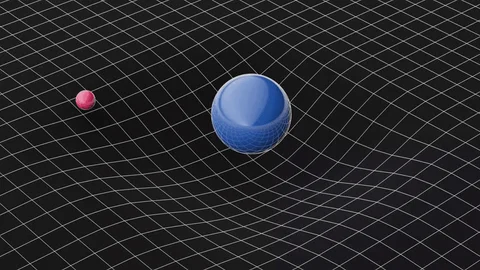
The following lectures were part of the two-week refresher course on General Relativity held at IUCAA, from 25 June to 4 July 2025. The course features two complementary tracks: Track A with a differential geometry approach to general relativity, including modern developments and conceptual connections with quantum theory, and Track B focusing on tensor calculus and the physical aspects of general relativity.
The course is ideal for university teachers, graduate students, and anyone seeking a structured, in-depth refresher in General Relativity.
Video Lectures
Track A — Prof. T. P. Singh▼
Lecture A1: History of gravitation
View Lecture Summary ▼
A historical overview of gravitational theory — from Ptolemy's geocentric model and Copernican heliocentrism, through Kepler's laws and Newtonian mechanics, to Maxwell's electromagnetism, Einstein's relativity, and the ongoing tension between general relativity and quantum theory.
Lecture A2: Modern perspectives on gravity and quantum theory
View Lecture Summary ▼
Structural parallels between gauge theories in particle physics and general relativity. Reviews multiple formulations of GR — metric, tetrad (vierbein), Palatini, ADM, Ashtekar, and Cartan — and addresses quantum gravity on spacetime using division algebras and the Dirac operator.
Lecture A3: Uniformly accelerated observers – the Rindler coordinates
View Lecture Summary ▼
Introduces uniformly accelerating reference frames in flat spacetime, Rindler coordinates for an accelerating observer, and the emergence of the Rindler horizon.
Lecture A4: Gravitation vs electromagnetism
View Lecture Summary ▼
Comparison of gravitation and electrodynamics at non-relativistic and relativistic levels — Newton vs Coulomb, magneto-statics and gravito-magnetism, Maxwell vs special-relativistic Newtonian gravitation. Discusses gravity as spacetime curvature and gauge theories in both frameworks.
Lecture A5: General relativity in the language of differential forms
View Lecture Summary ▼
Introduces differential geometry for GR: manifolds, vectors, one-forms, exterior derivative, gradient vector and one-form, dual basis, metric 2-form, Riemann tensor, and wedge products.
Lecture A6: Differential forms and exterior calculus
View Lecture Summary ▼
Area 2-forms, dot and vector products, Maxwell's equations via differential forms, Hodge star dual, exterior derivative, closed and exact forms, the fundamental theorem of exterior calculus, and revisiting Green's, Stokes' and Gauss' theorems.
Lecture A7: Connection 1-forms and Cartan structural equations
View Lecture Summary ▼
Curvilinear coordinates, parallel transport, covariant derivative in curvilinear coordinates, connection 1-forms, torsion and curvature 2-forms, Cartan structural equations, and the relation between connection 1-forms and connection coefficients.
Lecture A8: Computing curvature using differential forms
View Lecture Summary ▼
Different definitions of the Riemann tensor, curvature 2-form as vector parallel transport around a closed loop, computing curvature via Cartan's second structure equation, and Bianchi identities of the curvature 2-form.
Lecture A9: Motivating Einstein's equations and Weyl curvature
View Lecture Summary ▼
Concludes the differential-forms formulation of GR. Motivates the Einstein field equations from the Riemann curvature tensor, discusses the Weyl curvature tensor for matter-free spacetime, and outlines general properties of the Einstein equations in the language of differential geometry.
Lecture A10: Continuous gravitational collapse and black holes
View Lecture Summary ▼
Centrally symmetric gravitational field in vacuum, gravitational collapse of a spherical body, Tolman-Bondi and Dutt-Oppenheimer-Snyder solutions for dust collapse in Newtonian gravity and GR, and the formation of a black hole.
Lecture A11: Formation of naked singularities
View Lecture Summary ▼
Formation of naked singularities in the light of cosmic censorship conjectures. Introduces Horizonless Compact Objects (HCO) and their possible observational signatures.
Track B — Prof. Patrick Das Gupta▼
Lecture B1: Inertial frames, good clocks and the equivalence principle
View Lecture Summary ▼
Foundations of special and early relativistic physics. Defines inertial and non-inertial reference frames, explains the role of ideal clocks in measuring proper time, and introduces the invariant spacetime interval and the Minkowski metric.
Lecture B2: Differential geometry – I
View Lecture Summary ▼
Introduction to basic elements of differential geometry: open and closed sets, topology and topological space, covering of a topological space, functions and homeomorphisms, topological manifolds, and curves on manifolds.
Lecture B3: Differential geometry – II
View Lecture Summary ▼
Differentiable atlases and manifolds, smooth functions between manifolds, smooth curves, tangent and cotangent spaces, vectors and one-forms, coordinate bases, tensor products, and wedge products.
Lecture B4: Differential geometry – III
View Lecture Summary ▼
Coordinate bases, vector and 1-form fields, general tensor fields, p-forms, wedge products, exterior derivative, exact and closed forms, the metric tensor, Hodge star operation, Minkowski metric and Lorentz invariance, and proper time in accelerating frames.
Lecture B5: Tensor calculus and the Newtonian limit of general relativity
View Lecture Summary ▼
Introduction to tensor calculus — general tensors, connection coefficients, covariant derivative, metric tensor, transformation properties of tensors. Ends with linearised gravity and deriving the Newtonian limit of GR.
Lecture B6: Physical aspects of general relativity
View Lecture Summary ▼
Spherical polar coordinates, gravitational time dilation, gravitational frequency shift, 4-velocity in curvilinear coordinates, causality in curved spacetime, the Riemann curvature tensor, and the geodesic deviation equation.
Lecture B7: Geometrical aspects of general relativity and the energy-momentum tensor
View Lecture Summary ▼
Spacetime metric, Christoffel symbols, Riemann tensor in terms of Christoffel symbols, parallel transport, geodesic equation, Levi-Civita connection, Bianchi identities, the Einstein tensor, and the energy-momentum tensor.
Lecture B8: Einstein–Hilbert action and derivation of the energy-momentum tensor
View Lecture Summary ▼
Einstein equations, Weyl curvature tensor, Noether's theorem and conserved quantities in flat spacetime, derivation of the energy-momentum tensor via Hilbert's variational method, the Einstein-Hilbert action, and geometrodynamics.
Lecture B9: Deriving Einstein's equations and the Killing equation
View Lecture Summary ▼
Einstein field equations derived by extremizing the Einstein-Hilbert action. Gauge invariance of GR under infinitesimal coordinate transformations and derivation of the Killing equation.
Lecture B10: Killing vectors, conservation laws and cosmology
View Lecture Summary ▼
Killing vector fields and conserved quantities. Conservation of energy and angular momentum in Schwarzschild spacetime. Affine parameterisation of geodesics. Application of GR to cosmology via the FRW metric and Friedmann equations.
Special Lectures▼
Lecture 1: A refresher on quantum field theory
View Lecture Summary ▼
Poisson brackets and commutation relations, canonical quantization, quantising the simple harmonic oscillator, real scalar field and the Klein-Gordon equation, quantising the real scalar field, and the complex scalar field.
Lecture 2: Gravitational waves and LIGO India
View Lecture Summary ▼
Gravitational waves in the linearised approximation, the quadrupole formula, sources and properties, Compact Binary Coalescence, gravitational wave detection, the LIGO detectors, and details of the upcoming LIGO India detector.